


Spring in South Florida arrives like a promise. The light shifts just enough to feel golden again. The air carries that particular mix of warmth and salt breeze that reminds you exactly why you chose to live here. And for the next several months, your skin is going to face more sun, more heat, more outdoor living, and more demands than almost any other climate in the country would put it through.
The good news is that South Florida’s wellness community has been paying very close attention to this. And what is emerging from that attention is a genuinely exciting and increasingly science-backed understanding of what healthy, radiant skin actually requires. It is not a shelf full of expensive products. It is not a complicated routine. It is a whole-body approach that Miami’s most thoughtful wellness practitioners have been quietly building around for years.
If you have read our post on why elite hydration is South Florida’s best-kept wellness secret, you already know that what happens inside your body shows up on the outside. Skin is one of the most vivid examples of that principle in action. This post goes deeper into the science and the South Florida-specific context that makes this conversation different.

Why South Florida Is a Unique Environment for Your Skin
Most skin health advice is written for people who live in temperate climates with four distinct seasons. South Florida is not that. And understanding how our specific environment affects your skin is the starting point for everything else.
The sun here is not the same as the sun anywhere else in the United States. Florida receives more UV radiation annually than almost any other state, and that UV load affects your skin every single day, not just when you are at the beach. Walking to your car, sitting by a window in a cafe in Coral Gables, or enjoying a weekend afternoon on your Brickell balcony all represent meaningful cumulative UV exposure that adds up significantly over months and years.
The American Academy of Dermatology has been clear and consistent on this point for years. UV radiation is the single largest contributor to visible skin aging, including fine lines, uneven texture, dark spots, and loss of elasticity. In South Florida, this exposure is year-round and unavoidable. Which means the people who prioritize skin health here are not being vain. They are being strategic about an environmental reality that their counterparts in cooler climates simply do not face at the same level.
The humidity adds another layer of complexity. It can actually support skin hydration when you are drinking and eating well. But it also creates conditions where sunscreen, moisturizer, and other topical products perform differently than their formulations expect. Products that work beautifully in New York or Chicago can feel heavy and pore-clogging in Miami’s summer heat. This is why the most skin-conscious people in Florida have learned to think about their skin differently.

The Collagen Conversation: Why It Matters More in a Sun-Heavy Climate
Collagen is the structural protein that gives skin its firmness, bounce, and that quality people often describe as looking healthy or youthful. Your body produces it naturally, but UV radiation breaks it down. Consistently. Daily. And the rate of breakdown increases as UV exposure accumulates over a lifetime. This is not a scare story. It is simply useful information. Because understanding the collagen-UV relationship means you can make choices that slow the breakdown while actively supporting production at the same time.
Research published in the Journal of Investigative Dermatology has shown that photoprotection combined with nutritional support for collagen synthesis produces meaningfully better outcomes for skin health over time than either approach alone. In plain language: wearing sunscreen matters, and what you eat matters just as much.
The nutrients most consistently associated with collagen support are vitamin C, which is essential for the body’s collagen synthesis process, zinc, which supports skin repair and regeneration, and copper, which helps stabilize collagen structures. These are not exotic supplements. They are found in whole foods that the fresh and vibrant South Florida food culture makes genuinely easy to access.
Fresh citrus, leafy greens, seafood, nuts, and seeds are all collagen-supporting foods that happen to align perfectly with the kinds of meals that the region’s restaurants, farmers markets, and home kitchens already celebrate.
Hydration is also a direct input into collagen function. Collagen requires water to maintain its structure and flexibility. This is one of the most direct connections between the hydration conversation and the skin health conversation, and it is why both topics keep coming back to the same foundational habits.

The Gut-Skin Connection: What Miami’s Wellness Practitioners Are Talking About
If there is one idea that has genuinely transformed how thoughtful wellness practitioners in South Florida think about skin health over the past several years, it is this one. Your gut and your skin are in constant communication, and what is happening in your digestive system shows up on your face in ways that are far more direct than most people realize.
Dr. Whitney Bowe, a board-certified dermatologist and researcher who has written extensively about the gut-skin axis, describes the relationship this way: inflammation that originates in the gut travels through the body and manifests in the skin as acne, redness, sensitivity, and accelerated aging. Her research and the broader body of evidence she draws on make a compelling case that skin health is not primarily a topical problem. It is a systemic one. You can read more about her work and the science behind this connection at Dr Whitney Bowes research on the skin-gut axis.
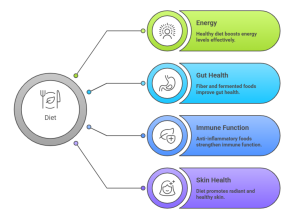
What this means practically for people living in South Florida is that the same dietary choices that support your energy, your gut health, and your immune function are also the ones most likely to show up as better skin. Foods that reduce systemic inflammation, meaning less refined sugar, less alcohol, less processed food and more fiber, more fermented foods, more colorful produce, tend to produce the kind of glow that topical products can only imitate.
South Florida’s restaurant culture actually makes this easier than it sounds. The region’s emphasis on fresh seafood, tropical fruits, vibrant salads, and international cuisines rich in vegetables and fermented ingredients is genuinely well-aligned with a gut-supportive eating pattern. The challenge is not access. It is awareness and intention.
Antioxidants: Your Skin’s Daily Defense Against South Florida Sun
Every time your skin is exposed to UV radiation, it generates something called free radicals. These are unstable molecules that damage skin cells, break down collagen, and accelerate the visible signs of aging. They are unavoidable when you live somewhere as sunny as South Florida. But they are not unmanageable.
Antioxidants are the compounds that neutralize free radicals. And they work from both directions. Applied topically, ingredients like vitamin C serum, vitamin E, niacinamide, and resveratrol help intercept free radical damage at the skin surface. Consumed through food and nutrition, antioxidants from berries, dark leafy greens, green tea, dark chocolate, and colorful vegetables build systemic protection that topical products cannot fully replicate on their own.
The combination of both approaches is where the most significant skin health outcomes happen.
Miami’s most skin-conscious residents tend to understand this intuitively even if they have not encountered the formal research. They wear sunscreen and eat well. They use good skincare and hydrate properly. They treat skin health the same way they treat the rest of their wellness practice, as something that works best when addressed from multiple angles simultaneously.
This is the philosophy that is increasingly reflected in the treatments and consultations available across Florida’s growing wellness community. If you want to explore practitioners and wellness centers in your area who work with this kind of whole-body approach to skin health, Zanteh Directory is a great place to start.
Sleep, Stress, and the Skin You See Every Morning
Two of the most powerful and most underestimated influences on skin health are also two of the most affected by the full and fast-paced lifestyle that many South Florida residents lead. Sleep and stress.During sleep your body produces growth hormone and goes into active cellular repair mode. Skin cells regenerate, collagen is synthesized, and the damage accumulated during the day is addressed. This is not a metaphor. It is a literal biological process that requires quality sleep to happen properly. When sleep is consistently cut short or disrupted, the repair cycle is incomplete and the effect shows up as dullness, puffiness, exaggerated fine lines, and slower healing of any skin irritation or sun damage.
Stress has a similarly direct impact. When your body is under chronic stress, cortisol levels stay elevated, and elevated cortisol breaks down collagen, increases inflammation, impairs the skin barrier function, and can trigger or worsen conditions like acne, rosacea, and eczema. We covered the cortisol conversation in some depth in our upcoming piece on stress and South Florida’s wellness response, but the skin connection deserves its own mention here because it is one of the clearest visible indicators that your nervous system needs attention.
The practices that support stress regulation, breathwork, adequate rest, movement you enjoy, time in nature, and genuine social connection, are also among the most effective skin health practices available to you. South Florida’s outdoor lifestyle, its community of wellness seekers, and its access to restorative experiences across neighborhoods like Coconut Grove, South Beach, Las Olas and other areas make these practices genuinely accessible. More accessible, perhaps, than anywhere else in the country. We wrote about the full scope of that in our piece on why Miami is becoming Americas most exciting wellness hub in 2026.

What the Most Glow-Worthy People in South Florida Actually Do
Across Miami, Fort Lauderdale, Boca Raton, and Palm Beach, the people whose skin genuinely radiates tend to share a remarkably consistent set of daily practices. Not a perfect ten-step routine. Not an unattainable wellness aesthetic. Just a handful of habits that compound beautifully over time.
They protect without paranoia. A broad-spectrum SPF applied every single morning, even on cloudy days, even if they are spending most of the day indoors. Not an inconvenience. A daily habit as automatic as brushing their teeth. They have accepted that South Florida’s UV environment is part of the deal and they protect accordingly.
They hydrate seriously. Not just water on the surface but cellular hydration through proper fluid intake, electrolyte balance, and attention to the signs of dehydration. If you missed our deep dive on this, it is worth reading because the hydration and skin connection is one of the most direct and impactful relationships in the entire skin health picture.
They feed their skin from the inside. Colorful produce, fresh seafood, healthy fats from avocado and olive oil, fermented foods, and minimal processed sugar. Not a restrictive diet. A joyful, South Florida-friendly way of eating that happens to be exactly what skin needs.
They sleep and manage stress with intention. They treat recovery as part of their skin routine even if they would not describe it that way. Early nights when the week has been full. Breathwork or movement that genuinely releases tension. Time outside in nature, which South Florida provides in extraordinary abundance.
They use the wellness resources available to them. Whether that is a consultation with a skin-focused wellness practitioner, a treatment that supports skin health from within, or simply staying informed about what the science is actually saying. South Florida has more of these resources than most people realize.
Glow Season Is a Mindset Not Just a Month
April in South Florida is spectacular. The weather is genuinely perfect before the intense summer heat arrives. The outdoor lifestyle is at its most appealing. The light is extraordinary. And your skin, if you are giving it what it actually needs, can be at its most luminous too.
The science of skin health is not complicated when you understand its foundations. Protect it from UV. Hydrate it from the inside. Feed it anti-inflammatory, collagen-supporting nutrition. Sleep well and manage stress with intention. And take advantage of the extraordinary wellness community that has built itself up around exactly these principles across South Florida.
Zanteh Directory connects you with skin-focused wellness practitioners, spas, and holistic health providers across Miami, Fort Lauderdale, Palm Beach, and beyond. Explore what is available in your area and find the practitioners who can support your skin health from the inside out.
Ready to Explore South Florida Wellness?
From skin health to whole-body wellness, Zanteh Directory is your guide to the best practitioners, studios, spas, and wellness centers across Florida.
Frequently Asked Questions
How does South Florida’s climate specifically affect skin health?
Florida’s combination of high year-round UV radiation, heat, humidity, and outdoor lifestyle creates unique skin health considerations that most general advice does not account for. UV exposure is the primary driver of collagen breakdown and visible skin aging, and in Florida that exposure is constant and cumulative rather than seasonal. The humidity can support skin hydration when the body is well nourished but also creates conditions where skin products perform differently. People living in Florida benefit from a more intentional and whole-body approach to skin health than residents of cooler, less sun-intensive climates.
What is the gut-skin connection and why does it matter?
The gut-skin axis refers to the bidirectional communication between your digestive system and your skin. When the gut microbiome is balanced and the gut barrier is healthy, systemic inflammation tends to be low and skin tends to be clearer, more resilient, and less prone to conditions like acne, redness, and sensitivity. When gut health is compromised, inflammation travels through the body and often shows up on the skin first. Research by dermatologists including Dr. Whitney Bowe has made this connection increasingly clear and it is reshaping how thoughtful wellness practitioners approach skin health in South Florida and beyond.
What foods are best for skin health in Florida?
Foods that support collagen synthesis including vitamin C-rich fruits and vegetables, zinc-containing foods like seafood and pumpkin seeds, and copper-rich foods like nuts and legumes all play a direct role in skin health. Anti-inflammatory foods including fatty fish, avocado, olive oil, berries, and leafy greens reduce systemic inflammation that would otherwise accelerate skin aging. Fermented foods like yogurt, kefir, and kimchi support the gut microbiome which connects directly to skin clarity and resilience. Minimizing refined sugar and highly processed foods reduces the glycation process that damages collagen over time. South Florida’s fresh food culture makes most of these foods genuinely easy to access.
How important is sunscreen for skin health in Miami?
Sunscreen is the single most impactful topical skin health practice for anyone living in South Florida. UV radiation is the primary driver of collagen breakdown, uneven pigmentation, textural changes, and accelerated visible aging. In Miami and throughout the region, UV exposure is year-round and occurs not just at the beach but through daily incidental exposure during commuting, outdoor dining, and time near windows. A broad-spectrum SPF applied every morning regardless of planned outdoor activity is the foundation of any serious South Florida skin health practice.
What wellness treatments in South Florida support skin health from the inside out?
A growing number of wellness practitioners and centers across Miami, Fort Lauderdale, and Palm Beach offer treatments that approach skin health systemically rather than just topically. These include IV nutrient therapy formulated with skin-supporting antioxidants and vitamins, functional medicine consultations that assess gut health and its relationship to skin, lymphatic drainage therapies that support cellular detoxification, and holistic nutrition consultations that build an eating plan around the skin-gut-inflammation connection. Zanteh Directory features providers across South Florida who specialize in these whole-body approaches to skin wellness.