


Stress Cortisol and the Quiet Toll of a Full Life: What South Florida Is Doing About It
Nobody in South Florida describes their life as easy. That is not a complaint. It is a point of pride. The career that demands your best, the social calendar that reflects how much people enjoy being around you, the family that needs your presence, the city that always has something extraordinary happening. A full life is the point. It is what most people here are working toward and working within simultaneously.
But a full life has a quiet cost. And it shows up in the body in ways that are easy to overlook until they are impossible to ignore.
Stress is not just a feeling. It is a physiological state with measurable effects on your hormones, your immune system, your cardiovascular health, your skin, your sleep, and the rate at which your body ages at a cellular level. The most vibrant well people across Miami, Fort Lauderdale, Coral Gables, and all areas across Florida, are not the ones with the least stress. They are the ones who have learned to work with it, respond to it intelligently, and recover from it consistently.
This post is about that. Not fear. Not restriction. Just an honest and optimistic look at what is happening in your body when life is full and what South Florida’s remarkable wellness community is doing about it.
What Cortisol Actually Is and Why It Is Not the Enemy
Cortisol has developed a bad reputation in the wellness world and it does not entirely deserve it. Cortisol is your body’s primary stress hormone and it is also one of its most essential regulatory chemicals. It wakes you up in the morning by spiking naturally just before and after you open your eyes. It sharpens your focus when you need to perform. It marshals your immune resources when you encounter a threat. It is a survival tool that evolution has spent millions of years perfecting.
The problem is not cortisol. The problem is cortisol that never comes back down.
When stress is temporary, cortisol rises, does its job, and returns to baseline. That is the system working as designed. When stress is chronic, meaning it is present at a low but persistent level day after day, cortisol stays elevated. And it is that chronic elevation that research has linked to a remarkable range of downstream effects. Dr. Elissa Epel at the University of California San Francisco, one of the world’s foremost researchers on stress and biological aging, has documented how chronic stress accelerates cellular aging through its effects on telomeres, the protective caps on your DNA strands that shorten each time a cell divides. In plain language: sustained chronic stress does not just make you feel older. It measurably ages your cells.
In South Florida, where the pace of professional life in Brickell, the social demands of Miami Beach, and the relentless energy of a city that never quite slows down create genuine and sustained pressure, this conversation is not theoretical. It is daily reality for a significant portion of the people living here.

What Chronic Stress Is Actually Doing to Your Body in South Florida
The effects of sustained elevated cortisol touch almost every system in the body. Understanding this is not meant to be alarming. It is meant to be clarifying, because when you understand what is actually happening you can respond to it with intention rather than confusion.
It affects your sleep even when you are tired. Elevated cortisol in the evening, when it should be at its lowest, disrupts the natural melatonin rise that signals your body to wind down. This is why so many high-functioning people in South Florida report lying awake despite genuine exhaustion. The gas pedal and the brake are both being pressed at the same time.
It affects your skin directly. We covered the gut-skin connection in our piece on the science of skin health and why Miamis wellness scene is leading. Cortisol is one of the most direct inflammatory signals in that chain. It breaks down collagen, compromises the skin barrier, and increases the kind of systemic inflammation that shows up as dullness, sensitivity, and accelerated aging.
It affects your weight and energy metabolism. Chronic cortisol elevation promotes fat storage particularly around the midsection, increases cravings for high-sugar and high-fat foods, and reduces the efficiency with which your body converts nutrients to energy. This is not a willpower issue. It is a hormonal one. And addressing the cortisol conversation is often the missing piece for people who are eating and exercising correctly but not seeing the results they expect.
It affects your immune function. Short-term cortisol spikes actually enhance immune response. But chronic elevation suppresses it, making you more susceptible to illness, slower to recover, and less resilient to the environmental demands that South Florida’s climate and lifestyle impose.
It affects cognitive performance. Harvard Medical School has published extensively on the relationship between chronic stress and the hippocampus, the brain region most responsible for memory and learning. Prolonged cortisol exposure literally shrinks hippocampal volume over time. The difficulty concentrating, the sense that your thinking is slightly less sharp than it used to be, the way creative problems feel harder than they once did. These are not signs of aging. They are often signs of unmanaged chronic stress.
The South Florida Context: Why This Matters More Here
Every city has stress. But South Florida has a particular combination of factors that makes the cortisol conversation especially relevant here.
The pace of professional life across Miami’s financial and entrepreneurial communities is genuinely intense. The social expectations in a city where image and presence matter as much as output create a different kind of sustained pressure than most people would experience in quieter markets. The climate, which is one of the great joys of living here, also means that the body is working harder at baseline to regulate temperature, which adds a low-level physiological load that compounds with everything else.
Traffic across the region, which ranks among the most stressful in the country, contributes to daily cortisol spikes that most people have simply normalized. The combination of commuting stress, professional pressure, social engagement, heat, and alcohol, which is present in South Florida’s social culture at a level few other cities match, creates a stress load that is meaningfully higher than what most wellness advice is calibrated for.
Understanding this is not about feeling worse about where you live. South Florida is genuinely extraordinary. It is about recognizing that managing your stress response here requires a little more intentionality than it might require elsewhere, and that the wellness community that has built itself up across this region is responding to exactly that reality.

What the Most Resilient People in South Florida Are Actually Doing
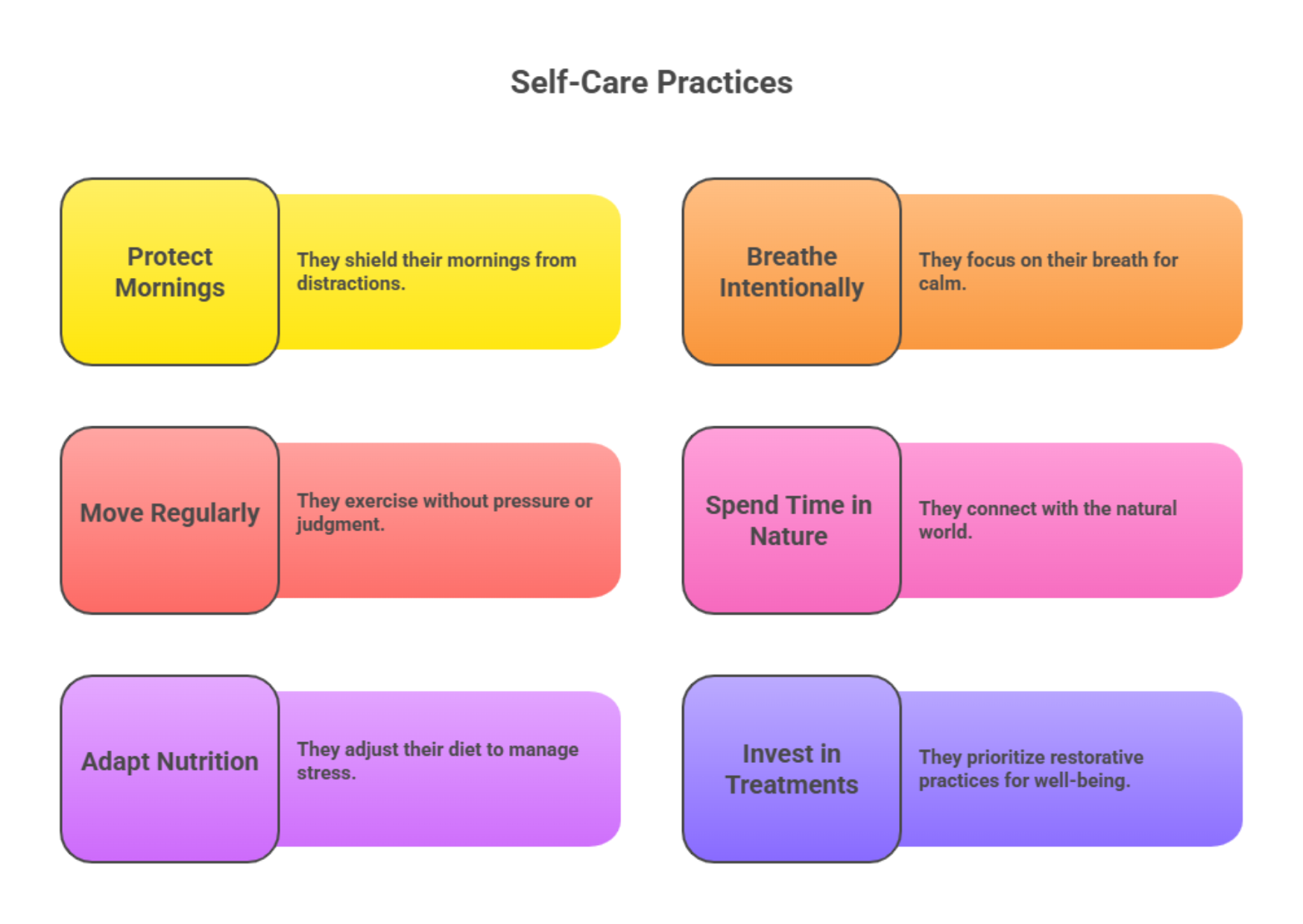
The people across Florida that are conscious about health and wellness are not the ones who have eliminated stress from their lives. They are the ones who have built consistent practices that lower their cortisol baseline and speed their recovery from cortisol spikes. Here is what that actually looks like.
They protect their mornings. The morning cortisol awakening response, the natural spike that happens in the first thirty to forty-five minutes after waking, is healthy and beneficial when it resolves quickly. The practices that support this, morning light exposure, hydration before caffeine, gentle movement, and a few minutes of stillness before engaging with devices or demands, help the morning cortisol do its job and then come down cleanly. We covered this in detail in our piece on Miamis energizing morning wellness habits.
They breathe intentionally. This sounds almost too simple to matter and yet the research on controlled breathwork as a cortisol regulation tool is remarkably consistent. Slow diaphragmatic breathing activates the parasympathetic nervous system, the rest and digest counterpart to the fight or flight stress response, in a way that produces measurable cortisol reduction within minutes. South Florida’s breathwork community, including the kind of experiences happening at events like the one we covered at Tala Beach, reflects a growing recognition of how powerful this simple practice actually is.
They move their bodies regularly but without treating it as another performance. Exercise is a genuine cortisol management tool, but intensity matters in both directions. Moderate consistent movement lowers baseline cortisol over time. Excessive high-intensity exercise without adequate recovery can actually raise it. The most stress-resilient people in South Florida tend to prioritize consistency and enjoyment over intensity, which happens to align with what the research recommends.
They spend time in nature. The evidence that time in natural environments reduces cortisol is robust and well documented. South Florida provides extraordinary access to natural environments, the ocean, the Everglades, the waterways, the parks, the greenways. The people who use these environments as recovery tools rather than just recreational ones are giving themselves a significant cortisol management advantage.
They adapt their nutrition to support their stress response. Certain nutrients play a direct role in cortisol regulation. Magnesium, which is one of the most common deficiencies in people under chronic stress, is required for the enzymatic processes that regulate cortisol production. Vitamin C is consumed during stress responses. Omega-3 fatty acids from fish and seeds have been shown in multiple studies to reduce cortisol reactivity. South Florida’s fresh food culture makes all of these nutrients genuinely accessible.
They invest in restorative treatments. From sound baths and float therapy to massage, infrared sauna, and acupuncture, South Florida’s wellness community offers a remarkable array of evidence-informed restorative treatments that directly support cortisol recovery. These are not indulgences. They are recovery tools, and the most resilient people in the region treat them that way. Zanteh Directory features wellness providers across South Florida who specialize in exactly this kind of restorative care.
The Adaptogens Conversation: What South Florida’s Wellness Community Is Exploring
One of the most interesting developments in the stress management space over the past several years is the growing scientific attention being paid to adaptogenic herbs and compounds. Adaptogens are a class of botanicals that research suggests may help the body respond to stress more efficiently by supporting the regulatory systems that govern cortisol production and clearance.
Ashwagandha is perhaps the most studied. A 2019 double-blind placebo-controlled study published in Medicine journal found that participants taking ashwagandha experienced significantly greater reductions in stress, anxiety, and cortisol levels compared to the placebo group. Rhodiola rosea, holy basil, and reishi mushroom are among the other adaptogens gaining research attention for their potential role in cortisol modulation.
The wellness practitioners and functional medicine providers across South Florida who work with stress and cortisol management are increasingly incorporating adaptogenic protocols into their approach. This is worth knowing if you are working with a wellness provider on stress-related concerns because it represents a growing and well-researched toolkit that goes beyond the conventional advice most people have already heard.
As always, speaking with a qualified practitioner before incorporating any supplement into your routine is the sensible approach, particularly if you are managing any existing health conditions or taking medications.
The Permission Slip Most South Florida Residents Need
Recovery is not the opposite of performance. It is the mechanism through which performance is sustained. The most accomplished people in every field, from professional athletes to leading executives to creative luminaries, share a consistent pattern of deliberate recovery built into their lives. Not as a luxury. As a requirement. Dr. Andrew Weil at the University of Arizona, one of the pioneers of integrative medicine, has written extensively about the idea that the body’s ability to rest and restore is as important as its ability to perform. That the practices that support nervous system recovery are not wellness extras. They are wellness foundations.
South Florida is genuinely one of the best places to build those practices into your life. The natural environment, the wellness community, the culture of health investment that has grown across every neighborhood from Wynwood to Worth Avenue, all of it is available to you.
You do not have to earn the right to recover. You just have to start. If you are new to thinking about your wellness in this way, our beginners guide to wellness in South Florida is a warm and practical place to begin.
A Full Life and a Well Body Are Not in Conflict
The goal of everything in this post is not to simplify your life. It is to help you sustain it. The career, the relationships, the social richness, the ambition, the beautiful South Florida life. All of it is worth protecting, and the most effective way to protect it is to protect the body and nervous system that makes it possible.
Stress is going to be part of that life. It always will be. The question is not how to eliminate it but how to respond to it in ways that keep you vibrant, clear, and genuinely well for the long arc of the life you are building here.
South Florida’s wellness community is doing remarkable work on exactly this. Explore the practitioners and wellness centers available near you at Zanteh Directory and find the support that fits where you are right now.
Find South Florida Wellness Support
Zanteh Directory connects you with trusted wellness providers, restorative treatment centers, and holistic health practitioners across Miami, Fort Lauderdale, Palm Beach, and all of South Florida. Start exploring what is available near you.
Frequently Asked Questions
What does chronic stress actually do to your body over time?
Chronic stress keeps cortisol levels elevated beyond what the body is designed to sustain. Over time this affects multiple body systems simultaneously. Sleep quality declines because elevated evening cortisol interferes with melatonin production. Skin health suffers as cortisol breaks down collagen and increases systemic inflammation. Cognitive performance is impaired as prolonged cortisol exposure affects the hippocampus, the brain region responsible for memory and learning. Immune function is suppressed, making the body slower to recover from illness. Weight management becomes harder as cortisol promotes fat storage and increases cravings for sugary and fatty foods. Understanding these effects is the first step toward addressing them with intention.
What are the most effective practices for managing cortisol in daily life?
The practices with the strongest research support for cortisol management include protecting morning routines with light exposure, hydration, and stillness before engaging with devices or demands. Consistent moderate movement performed for enjoyment rather than intensity. Intentional breathwork using slow diaphragmatic breathing to activate the parasympathetic nervous system. Regular time in natural environments, which South Florida provides in extraordinary abundance. Adequate sleep as the primary cortisol recovery mechanism. Nutrition that includes magnesium-rich foods, vitamin C, and omega-3 fatty acids. And restorative treatments such as float therapy, massage, infrared sauna, and sound healing that directly support nervous system recovery.
What are adaptogens and do they help with stress?
Adaptogens are a class of botanicals that research suggests may help the body regulate its stress response more efficiently. Ashwagandha is the most studied, with multiple clinical trials showing meaningful reductions in cortisol levels and reported stress compared to placebo. Rhodiola rosea, holy basil, and reishi mushroom are among the others gaining research attention. Wellness practitioners and functional medicine providers across South Florida are increasingly incorporating adaptogenic protocols into stress management approaches. Speaking with a qualified practitioner before adding any supplement to your routine is always the recommended approach, particularly if you have existing health conditions.

